




 SAHELI
works with a focused objective of ending
incidences of child marriage among its
target communities. The organization follows
a structured process of case identification,
informing all the concerned, intervene along
with local governments and leadership as
well as local communities, and intimate all
responsible for vigilance. Intervention
primarily involves mediation in which enough
opportunity is provided for dialogue and
discussion to all concerned upholding the
principles of respect, confidentiality and
community ownership. Besides this approach
offers space for everyone to reflect own
situation critically and make necessary
corrections in alignment with community
expectation in a process of slowly
influencing social and cultural norms.
SAHELI
works with a focused objective of ending
incidences of child marriage among its
target communities. The organization follows
a structured process of case identification,
informing all the concerned, intervene along
with local governments and leadership as
well as local communities, and intimate all
responsible for vigilance. Intervention
primarily involves mediation in which enough
opportunity is provided for dialogue and
discussion to all concerned upholding the
principles of respect, confidentiality and
community ownership. Besides this approach
offers space for everyone to reflect own
situation critically and make necessary
corrections in alignment with community
expectation in a process of slowly
influencing social and cultural norms.
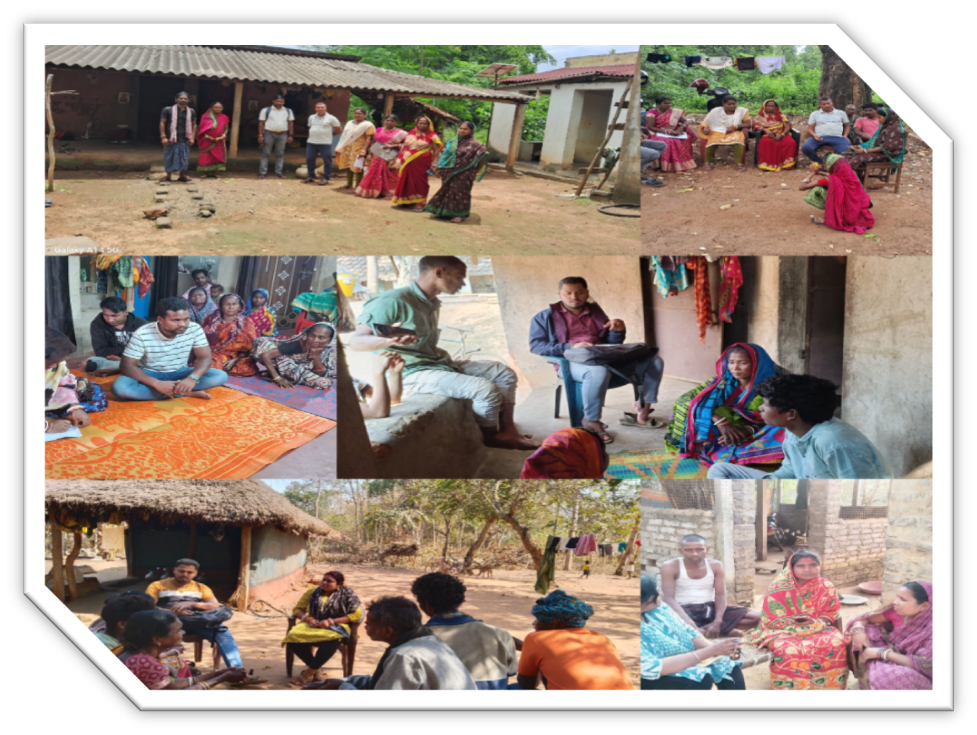
Members of Village Level Child Protection
Committees (VLCPCs) sometimes supported by
field staff of SAHELI proactively identify
potential and proposed cases of child
marriage and engage directly with parents,
guardians, and children to conscientize them
on the legal, social, health, and
psychological consequences of child
marriage.
Where persuasion fails and families persist,
SAHELI intervenes directly to prevent the
marriage, seeking the support of statutory
authorities notified by the government from
time-to-time as the Child Marriage
Prohibition Officers (CMPO), child-line, the
District Child Protection Unit (DCPU) and
the Police. However, rarely does SAHELI take
the route of legal course of action.
Preventive efforts are strengthened through
continuous awareness-building activities,
including small group discussions, peer-led
interpersonal communication, mid-media
cultural programmes, disseminating messages
through social media platforms, utilising
influencers, discussions with school
children and community sensitization
sessions. SAHELI also engages, existing
arrangements (women SHGs, Gender CRP, and
Youth Clubs), specially established
community-based institutions by SAHELI
(Adolescent Girls' Groups, VLCPCs,
Adolescent Girls' Federation and so on),
government supported institutions (Child
Welfare Committee, Childline, shelter homes,
and one-stop centre) and government
functionaries at sub-district levels to
create sustained community vigilance and
collective action against child marriage.
 SAHELI
works to substantially reduce instances of
violence against women and to support women
affected by domestic abuses and marital
breakdowns. The organization follows a
systematic process of Identify, Inform,
Intervene, Negotiate, and Reintegrate, with
a strong emphasis on dialogue and
reconciliation wherever possible.
SAHELI
works to substantially reduce instances of
violence against women and to support women
affected by domestic abuses and marital
breakdowns. The organization follows a
systematic process of Identify, Inform,
Intervene, Negotiate, and Reintegrate, with
a strong emphasis on dialogue and
reconciliation wherever possible.
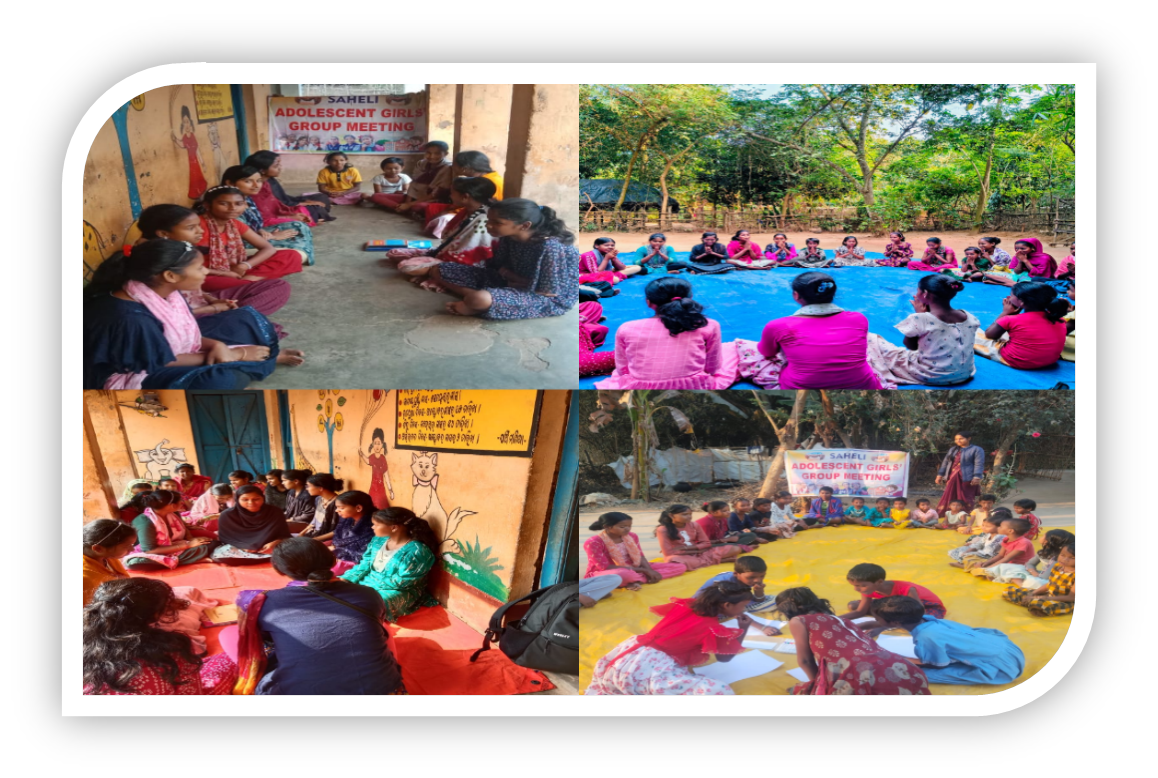
Members of VLCPCs sometimes supported by
field staff of SAHELI proactively identify
cases of violence against women and initiate
continuous dialogue with both parties.
Through counselling, persuasion, negotiated
mediation, and community meetings SAHELI
seeks to resolve conflicts while restoring
dignity and safety for women. Engagement
with statutory authorities is pursued only
when necessary upholding the strength as
well as the role of community in settling
such cases.
Preventive efforts are strengthened through
continuous awareness-building activities,
including small group discussions, peer-led
interpersonal communication, mid-media
cultural programmes, messages disseminated
through social media platforms, seminars
specially designed for school students and
talks of influencers, and community
sensitization sessions.
Community-based organizations such as
Self-Help Groups (SHGs), Youth Clubs,
Adolescent Groups, and AGF are actively
engaged, along with VLCPCs which has more
statutory nature to foster a strong,
collective community response against
gender-based violence.
 Empowerment
of Adolescent Girls is a journey from a
place of less power and fewer assets to a
place of greater power and more assets.
SAHELI interprets empowerment of adolescent
girls as a personal as well as a collective
journey during which they, through increased
assets and critical awareness develop a
clear and evolving understanding of
themselves, their rights and opportunities
in the world around them, and through
increased agency, and voice and
participation, gain the power to make
personal and public choices for the
improvement of their lives and their world.
Technical note developed by UNICEF on
empowerment of adolescent girls has
identified four dimensions of empowerment.
SAHELI is in the process of pursuing the
following four dimensions of empowering
adolescent girls.
Empowerment
of Adolescent Girls is a journey from a
place of less power and fewer assets to a
place of greater power and more assets.
SAHELI interprets empowerment of adolescent
girls as a personal as well as a collective
journey during which they, through increased
assets and critical awareness develop a
clear and evolving understanding of
themselves, their rights and opportunities
in the world around them, and through
increased agency, and voice and
participation, gain the power to make
personal and public choices for the
improvement of their lives and their world.
Technical note developed by UNICEF on
empowerment of adolescent girls has
identified four dimensions of empowerment.
SAHELI is in the process of pursuing the
following four dimensions of empowering
adolescent girls.
 An
asset is a valuable thing related to what a
person can do or be that (can be) used to
reduce vulnerabilities and expand
opportunities. Assets include resources,
knowledge, and skills that adolescents can
draw upon to shape their lives and contend
with shocks on their own and on behalf of
others. Assets can be competencies
(self-esteem, knowledge or skills),
circumstances (family support, peer
networks), and/or external resources (ID
cards, property, internet access) that
mediate risks and help adolescents thrive.
SAHELI has adopted an asset building
approach in this project.
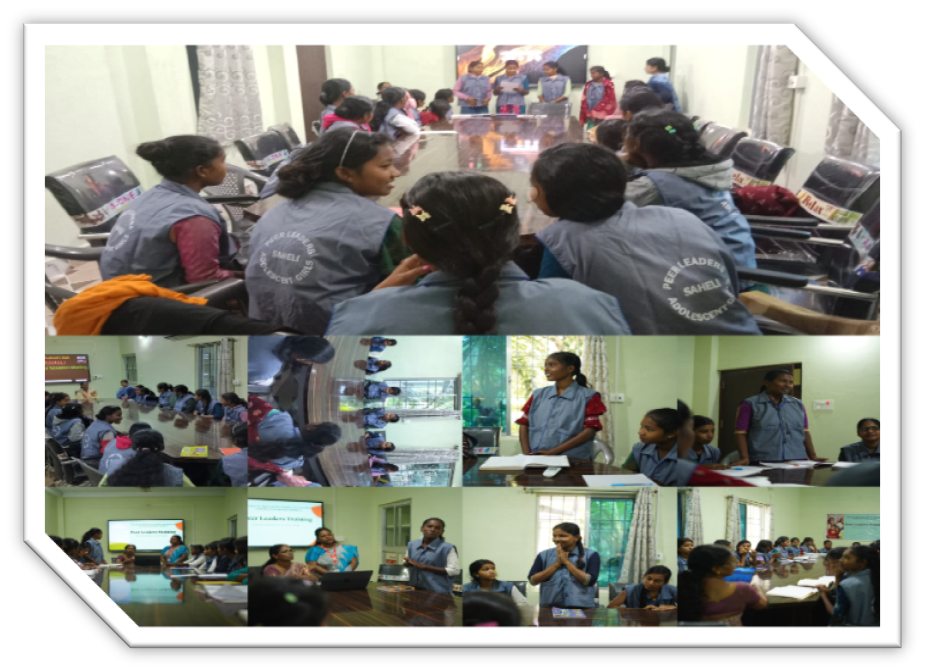
An
asset is a valuable thing related to what a
person can do or be that (can be) used to
reduce vulnerabilities and expand
opportunities. Assets include resources,
knowledge, and skills that adolescents can
draw upon to shape their lives and contend
with shocks on their own and on behalf of
others. Assets can be competencies
(self-esteem, knowledge or skills),
circumstances (family support, peer
networks), and/or external resources (ID
cards, property, internet access) that
mediate risks and help adolescents thrive.
SAHELI has adopted an asset building
approach in this project.
Critical awareness refers to an active, persistent and careful consideration of a belief or type of knowledge, including of one's identity and their rights as enshrined in human rights frameworks such as the United Nations Convention on the Rights of the Child. An expanding understanding of one's surrounding environment is an essential component of critical awareness. Empowered adolescents explore their evolving and emerging identities, deepening their understanding of how to negotiate between their expected role in the world, and the role they want to play to fully realize their rights. The awareness that adolescents can develop is not just of their individual self, but also of broader inequities and discrimination that are manifested in their communities. SAHELI encourages participation of adolescents in regular (weekly) sessions where they discuss the challenges for survival; obstacles encountered to their academic and social development along with discussion of actions needed to navigate and change such inequities; and bringing adolescents together to discuss how and why certain adolescents tend to be more at risk of sexual violence.
 Agency
means the personal capability to act and
make free and informed choices to pursue a
specific goal. Agency is at the heart of
adolescent empowerment. Having agency
implies that an adolescent can envision and
act on a path of action to pursue their own
goals and to make an Impact on their
surroundings. For adolescents to gain
agency, this typically includes enabling
them to acquire skills such as critical
awareness, problem solving and communication
skills to help navigate in the world around
them; build self-efficacy; and support the
accumulation of knowledge. Agency also
facilitates adolescents to more actively
participate and civically engage in the
world around them, improving the status and
situation of themselves and other
adolescents. Protection is a key principle
and strategy in promoting agency. Agency and
protection are mutually reinforcing:
fostering a protective environment
facilitates the development of agency by
opening up opportunities for decision-making
that adolescents may not otherwise have. At
the same time, gaining agency can help
ensure protection. Externally imposed
protective measures, such as legislation and
codes of conduct, are not sufficient to keep
adolescents safe if they themselves are not
able to recognize potentially dangerous or
abusive situations and/or take action to
minimize risks. This perspective embraces a
broad vision of protection (as the positive
promotion of optimal development and
well-being). SAHELI made a beginning in
agency building in this project when it
started creation of federation of Adolescent
Girls Groups
Agency
means the personal capability to act and
make free and informed choices to pursue a
specific goal. Agency is at the heart of
adolescent empowerment. Having agency
implies that an adolescent can envision and
act on a path of action to pursue their own
goals and to make an Impact on their
surroundings. For adolescents to gain
agency, this typically includes enabling
them to acquire skills such as critical
awareness, problem solving and communication
skills to help navigate in the world around
them; build self-efficacy; and support the
accumulation of knowledge. Agency also
facilitates adolescents to more actively
participate and civically engage in the
world around them, improving the status and
situation of themselves and other
adolescents. Protection is a key principle
and strategy in promoting agency. Agency and
protection are mutually reinforcing:
fostering a protective environment
facilitates the development of agency by
opening up opportunities for decision-making
that adolescents may not otherwise have. At
the same time, gaining agency can help
ensure protection. Externally imposed
protective measures, such as legislation and
codes of conduct, are not sufficient to keep
adolescents safe if they themselves are not
able to recognize potentially dangerous or
abusive situations and/or take action to
minimize risks. This perspective embraces a
broad vision of protection (as the positive
promotion of optimal development and
well-being). SAHELI made a beginning in
agency building in this project when it
started creation of federation of Adolescent
Girls Groups
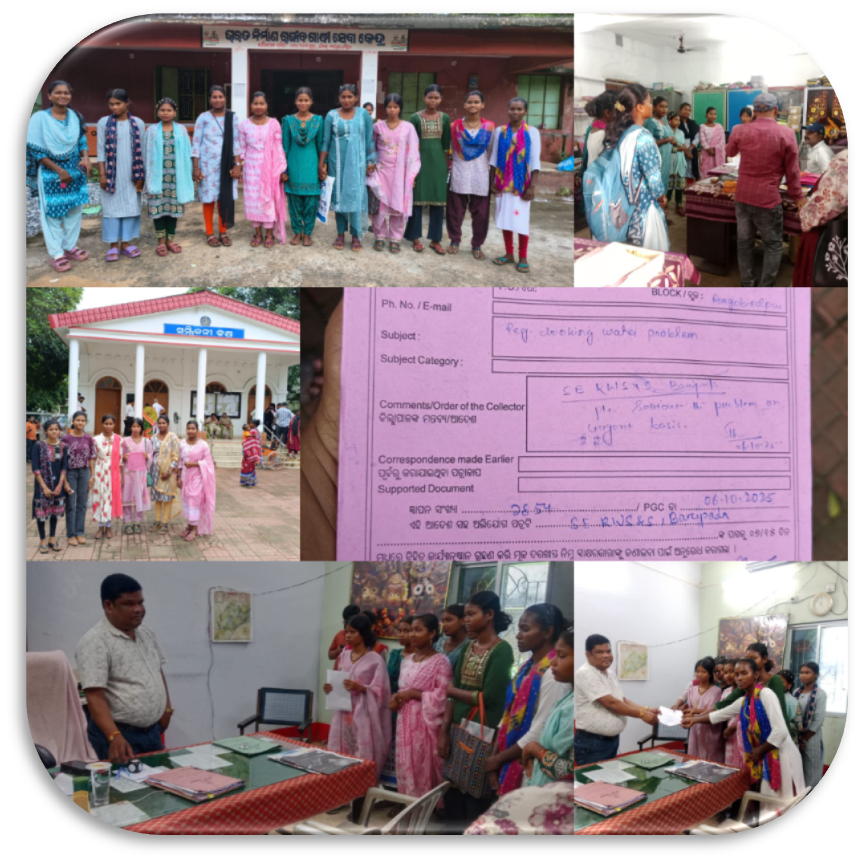
Voice means the ability and confidence to
articulate thoughts and emotions.
Participation refers to people (individually
and/or collectively) forming and expressing
their views and influencing matters that
concern them directly and indirectly.
Participation is about being informed,
engaged and having a voice and influence in
decisions and matters that affect one's life
- in private and public spheres, in the
home, in alternative care settings, at
school, in the workplace, in the community,
in social media, and in broader governance
processes. Adolescents who have developed,
or are in the process of developing,
critical awareness must be engaged in
selected actions to increase voice and
participation. The first action towards this
has been taken when the leaders of AGG
Federations met and discussed with the ABDO
and the BEO of Rasgovindpur CD Block.
In addition, SAHELI conducts life skills
education sessions based on modules approved
by the World Health Organization (WHO) and
the Government of India, with a focus on
confidence-building, decision-making, health
awareness, and self-protection. Attempts are
made to locate dropouts with causes and
means to readmissions and ensure
scholarships not only to them but to all
students.
|*| Baseline assessment and planning based
on results of baseline study
|*| Regular house visits, locate the needs
and discuss the means to solve
|*| Promotion of adolescent girls' groups (AGG)
|*| Weekly meetings of all AGGs with games,
exercises, performance of different
capabilities
|*| Formed adolescent girls' federation at
apex levels to lead public actions
|*| Revenue village, Gram Panchayat, and
Block or project level meetings with
multiple activities
|*| Engagements with service providers
(teachers, AWW, PRI leaders etc.)
|*| Short visits and exposure visits for
cross learning
|*| Public actions to address their own as
well as community
|*| Learning sessions


